
Rogue Racing Pinkslip
Babaroga, LLCRacing
4.432.00 Reviews
- Version
- 2.0
- Installs
- 10.00K
- Age Rating
- Everyone
Screenshots
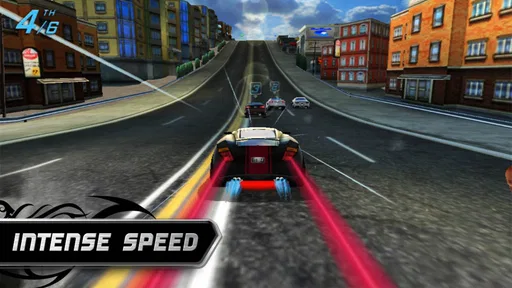
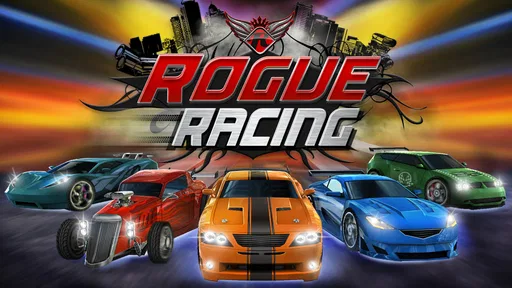
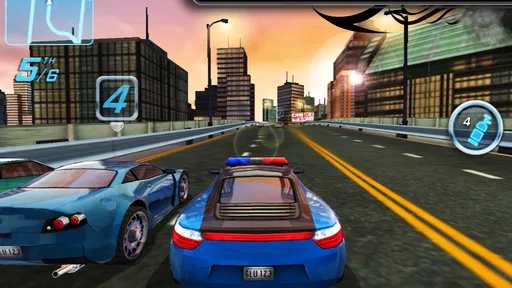
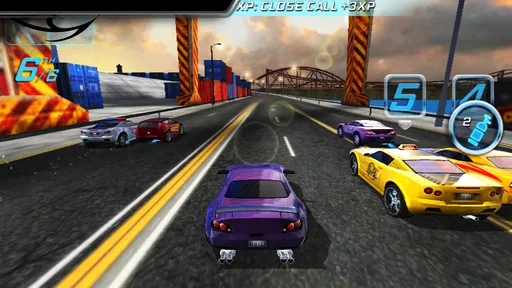
Our Review of Rogue Racing Pinkslip
 Analysis by Appyee
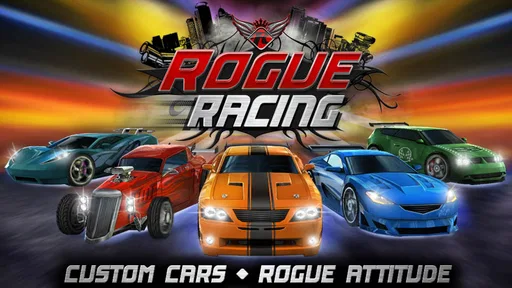
I went into Rogue Racing Pinkslip expecting a quick mobile racer, but its appeal is more specific than simply driving fast. This is a free racing game from Babaroga, LLC built around the fantasy of putting together a custom street-racing machine and taking it into a tense run. The best part is the feeling that each race is a small test of preparation, reaction, and nerve rather than just a straight sprint from one end of a track to the other.
That distinction matters because this is not the kind of game I would choose when I want a huge simulation, a deep career mode, or a broad collection of licensed cars. I see it more as a compact arcade experience for short bursts. It works well when I have a few minutes to fill and want something more involving than an endless runner, but it also has enough racing tension to make me attempt “one more” run after a loss.
How the racing loop feels from the first run to the next attempt
I find the first run most useful as a low-pressure test: I can learn the race’s feel before deciding whether my rig or my timing needs attention. The key is to carry one observation into the next attempt rather than changing several things at once. That small habit makes the repeat cycle feel more like learning than guesswork, and it leads naturally to the practical checks that can make a session smoother.
The first action is getting into a race mindset
The game’s central idea is easy to understand: street racing with fully custom racing rigs. That setup gives the action a personal angle. I am not merely selecting a generic vehicle and following a fixed upgrade path in my head; I am thinking about the machine as something I have prepared for the next challenge. Even when I play casually, that sense of ownership makes the result of a race feel more connected to my choices.
The opening appeal is immediate because the premise does not require a long explanation. Racing games often lose momentum by burying the player under menus, tuning screens, or complicated career rules. Here, the important question is much simpler: am I ready to put my rig on the street and see how it performs? That directness makes the game approachable for someone who normally avoids technical racing titles.
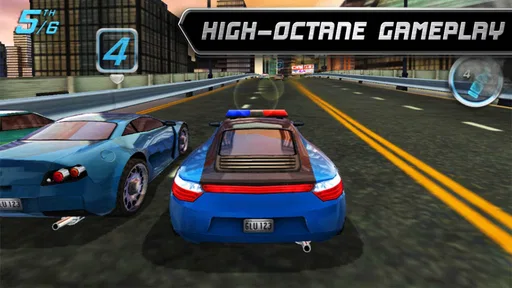
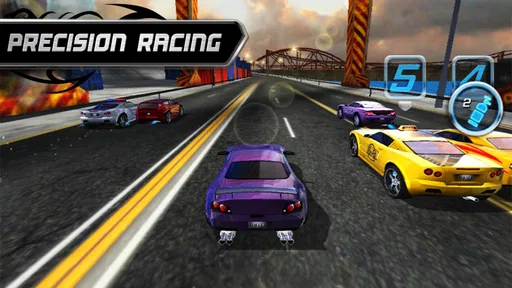
I would recommend beginning with a patient run rather than trying to drive aggressively from the first second. In a game centered on custom rigs, the temptation is to treat every race as a chance to prove that the machine is powerful. My better approach is to use the first attempt as a reading exercise. I pay attention to how the vehicle responds, where I lose control, and whether my mistakes come from poor timing or from choosing a setup that does not suit my style.
That is one of the more useful ways to approach the game: separate the quality of the rig from the quality of the decision behind the wheel. A strong machine does not automatically make every run successful. If I rush, react late, or repeat the same mistake, customization becomes a distraction instead of an advantage. The game is more satisfying when I treat each race as feedback for the next one.
Feedback arrives in a compact, repeatable rhythm
The racing rhythm is what keeps the experience from feeling disposable. I take action, receive an immediate result, and then have a reason to reconsider my next move. A clean run gives me confidence, while a poor one exposes a specific weakness in my approach. That quick connection between input and consequence is important on a phone, where a game has to communicate its value before the player loses patience.
I like that the custom-rig concept gives the feedback a practical context. When a race goes badly, I am not only thinking, “I lost.” I am also asking whether I prepared badly, pushed too hard, or failed to adapt. That makes a defeat more useful than a simple game-over screen. The experience encourages experimentation, although players who want a very clearly explained tuning system may find the learning process less comfortable than in a more traditional racing simulator.
There is also a psychological rhythm to the street-racing theme. The races feel like individual confrontations rather than a long, relaxed tour through a large racing world. That creates pressure, but it also keeps the game focused. I do not need to commit to a long championship session to enjoy it. A single attempt can have a complete shape: prepare, race, judge the outcome, and decide whether the next try is worth it.
For everyday play, that makes it a good companion during a short break. I can start a session while waiting for food or during a commute stop, play with concentration for a few minutes, and put it down without feeling that I abandoned a complicated campaign. At the same time, the quick format can expose its limits. If I want a lengthy progression arc with a strong story and many different race types, this is not the alternative I would pick.
Customization is most useful when it supports a plan
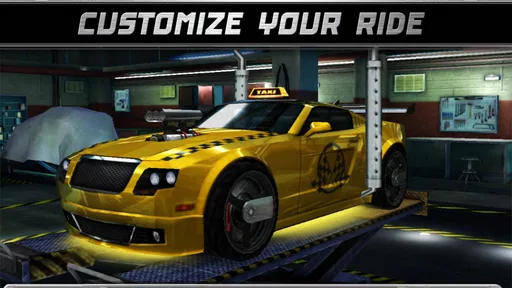
The phrase “fully custom racing rigs” is not just decoration in my view; it points toward the game’s main strategic hook. Customization matters because it gives me a reason to think before repeating a race. Instead of treating every attempt as an identical restart, I can use the result to decide what kind of change might improve the next run.
My practical tip is to make one meaningful adjustment at a time whenever the game allows it. Changing everything after a loss makes it impossible to know what helped. A single change creates a clearer comparison between attempts, especially when I am still learning the feel of the car. This is a small habit, but it turns random trial and error into a more controlled process.
There is a trade-off here. Players who enjoy building a vehicle around a personal style will probably get more from the game than players who want the best setup handed to them. The appeal is not only winning; it is understanding why a particular rig feels better for the way I play. On the other hand, anyone looking for the detailed mechanical realism of a dedicated console or PC racing simulator should keep expectations modest. This is a mobile street-racing game first, not a workshop simulator.
I also find customization more rewarding when I resist the urge to chase a single “perfect” build. A rig that feels comfortable and predictable can be more useful than one that looks powerful on paper. In short sessions, confidence has real value: I would rather know how my setup behaves than constantly rebuild it without learning its strengths and weaknesses.
The reward is the reason a loss can still be useful
The reward structure works best when I view progress as information as well as success. Winning is obviously the most satisfying outcome, but the game’s loop also gives a failed attempt a purpose if it teaches me something about my rig or my timing. That is what makes another session feel justified instead of merely repetitive.
A good race produces several kinds of satisfaction. There is the immediate pleasure of controlling the run, the relief of seeing a risky decision work, and the longer-term feeling that I understand my machine better than I did before. Those layers are modest compared with a large racing game’s career progression, but they suit the compact format. I can leave after a successful attempt with a clear sense that the session reached a natural stopping point.
The free price makes it easy to try without treating the first session as a financial commitment. Optional in-app purchases range from $1.99 to $12.99 per item, so I would approach those purchases carefully and decide whether they genuinely improve my enjoyment. My advice is to spend time learning the basic loop first. If the driving and customization already feel rewarding, a purchase may be easier to judge. If the core racing does not hold my attention, buying extra content will not solve that problem.
This is also where the game differs from many free racing alternatives. Some mobile racers are built mainly around collecting an enormous garage, waiting for timers, or pushing players toward repeated upgrades. Rogue Racing Pinkslip feels more appealing when I focus on the direct relationship between my rig and the next race. Still, players who enjoy a large collection of cars, constant unlocks, or a highly social competition layer may find other games more motivating.
One useful routine is to stop after a genuinely good run instead of immediately chasing a better result. Ending on a clear success protects the game’s short-session strength. When I return later, I am coming back because I want to test myself again, not because I have turned the experience into an exhausting grind.
The reset is quick, but repetition needs a personal goal
Every racing game depends on the reset: the moment after a result when the player decides whether to try again. Here, that decision feels natural because the races are compact and the custom-rig idea gives the next attempt a purpose. I can change my approach, adjust my expectations, or simply try to execute the same plan more cleanly.
The reset works especially well for players who enjoy improving through repetition. I like games where a loss does not force me into a long recovery sequence. I can review what happened and get back into the action. That low friction is valuable on mobile, where interruptions are common and a session may end unexpectedly.
However, repetition can become less compelling if I do not set a specific objective. “Win the next race” is sometimes too vague. A better target might be to avoid one recurring mistake, test a different rig choice, or complete a run without making a risky move too early. These smaller goals make the reset feel like a deliberate experiment rather than an automatic replay.
This is one of the game’s less obvious strengths: it can support different levels of attention. I can play casually and enjoy the street-racing atmosphere, or I can become more analytical and use each attempt to refine my decisions. The second approach gives the game more staying power, but it also asks me to create some of my own structure. Someone who needs a constantly expanding set of explicit objectives may eventually feel that the loop is too self-directed.
I would also avoid judging the game after only one rushed session. The custom-rig concept becomes clearer when I give myself time to notice the connection between preparation and performance. At the same time, I would not recommend forcing a long play period if the basic action does not click. Its appeal depends on enjoying the repeatable race-and-review cycle, and no amount of persistence will make that style suitable for everyone.
Who should install it, and who should choose something else
I think the game is a good fit for players who want a free arcade racing experience with a street-focused identity and room to personalize their racing machines. It is particularly suitable for short sessions, casual experimentation, and people who like the feeling of improving through repeated attempts. The Everyone content rating also makes it approachable for a broad audience, although younger players should still have an adult discuss optional purchases before spending anything.
It is less suitable for someone searching for realistic motorsport rules, a massive open world, or a deep online league. It also may not satisfy players who dislike repeating races after failure. The game’s pleasure comes from the loop, so repetition is not a side effect; it is the main structure. If I want a constantly changing spectacle, I would look toward a larger racing title with more varied events and a more expansive progression system.
Compared with a typical endless racer, this game feels more intentional because the custom-rig idea gives the next attempt a clear context. Compared with a full simulation, it is easier to pick up and less demanding, but it does not offer the same level of technical depth. That middle position is its identity: more personal than a purely reflex-based runner, more accessible than a serious racing simulator.
The device requirement is also worth checking before installing. The game is listed for Android versions starting with 8.0, and the current version is 2.0. That makes it relevant to many relatively recent Android phones, though actual comfort will still depend on the device’s screen, controls, and performance. I would use a stable connection for downloading and updating, then focus on finding a control setup that lets me react without covering too much of the display.
My verdict on the action, reward, and restart cycle
After spending time with it, I see Rogue Racing Pinkslip as a focused racing game whose strongest feature is not sheer scale but the clarity of its loop. I prepare a rig, take it into a street race, read the result, and decide what deserves another attempt. That cycle is simple, but it has enough tension to make a short session feel complete.
The feedback is strongest when I play thoughtfully. A careless run can end up feeling repetitive, while a deliberate run gives me something concrete to learn. The reward is not limited to winning; it is also the growing sense that I understand how to approach the next race. The reset then becomes an invitation to test that understanding instead of a punishment.
Its limitations are equally clear. Players seeking a deep simulation, a broad career, or endless variety should choose a different racing game. The optional purchases also deserve restraint, because the free entry point is useful for deciding whether the core loop is genuinely enjoyable before spending money. For me, that balance is reasonable as long as I treat the game as a compact arcade racer rather than expecting a complete console-style racing package.
The game has earned a 4.4 average from over 400 ratings, with more than 10K installs, which fits my impression that it has found a small but interested audience. I would recommend giving it a try if the idea of building a personal racing rig and refining your next street run sounds more appealing than collecting dozens of unrelated cars. The best reason to return is simple: each attempt gives you a fresh chance to turn one mistake into a better race.
In my experience, that is where the game succeeds. It does not need to dominate an entire evening. It only needs to make the next run feel meaningful, and when the setup, action, feedback, and reset line up, it does exactly that.
Verdict
Strengths of Rogue Racing Pinkslip
- Fast, pick-up-and-play races that work well for short sessions.
- Pink-slip stakes add tension and make every race feel meaningful.
- Simple controls are easy to learn, even for casual racing fans.
- Distinctive visual style gives the game a memorable personality.
- Winning rival cars provides an engaging sense of progression.
Limitations of Rogue Racing Pinkslip
- Losing a pink-slip race can erase progress and feel especially punishing.
- The gameplay may become repetitive once the available events are completed.
- Limited customization can disappoint players seeking deep car tuning.
- Difficulty spikes may make later races frustrating without upgrades.
- Online features or active opponents may be limited depending on the version.
Similar Picks in This Category
View All
Hill Climb Racing
Fingersoft4.3

Dr. Driving
SUD Inc.4.2

Traffic Rider
skgames4.5

Asphalt 8 - Car Racing Game
Gameloft SE4.6

Race Master 3D: Car Racing
Beresnev Games4.6

Extreme Car Driving Simulator
AxesInMotion Racing4.3
Frequently Asked Questions
What is Rogue Racing Pinkslip?
Rogue Racing Pinkslip is a competitive racing game focused on high-stakes street races where winning and losing can have meaningful consequences. You choose vehicles, compete against rival drivers, and work to improve your performance through better timing, upgrades, and race strategy. Its appeal comes from combining fast races with a risk-and-reward system rather than offering only traditional lap-based competition.
How does the pink-slip racing system work?
The pink-slip concept generally means that a race can involve wagering a vehicle or another valuable in-game reward. Before accepting a challenge, you should carefully review the terms, your opponent’s difficulty, and what you could lose. This system makes victories feel more rewarding, but it also means that careless decisions can set back your progress, so conservative play is advisable when your garage is limited.
Is Rogue Racing Pinkslip free to download and play?
The game may be available to download without an upfront purchase, but the exact monetization model can vary by platform and version. Players should check the store listing for optional in-app purchases, advertising, premium currency, or paid upgrades. Even when the core experience is free, spending may accelerate progression or provide additional resources, so reviewing purchase settings is recommended before playing.
Does Rogue Racing Pinkslip require an internet connection?
An internet connection may be needed for features such as account synchronization, online challenges, leaderboards, advertisements, event updates, or multiplayer-style competitions. Some parts of the game could remain accessible offline, but availability can depend on the current version and device. If you plan to race while traveling, test the game beforehand rather than assuming every mode will work without mobile data or Wi-Fi.
Is Rogue Racing Pinkslip suitable for all players?
Rogue Racing Pinkslip is likely to appeal most to players who enjoy arcade racing, competitive challenges, and risk-based progression. It may be less suitable for younger users if it includes aggressive themes, wagering mechanics, advertisements, or optional purchases. Parents should review the game’s age rating and store description, enable purchase restrictions where necessary, and explain that in-game vehicle losses or rewards are part of the gameplay system.
Play our best games!


